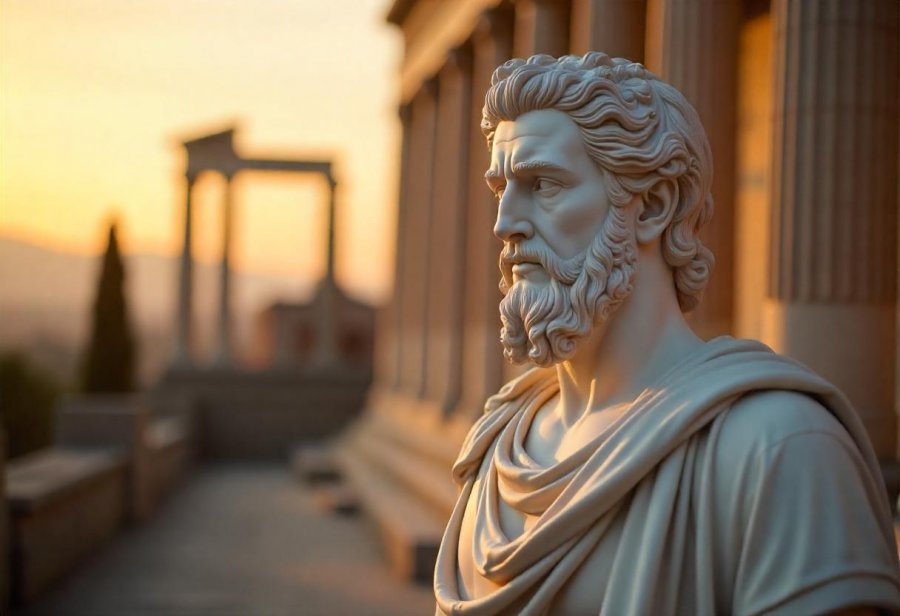
Isaac Newton’s story is a testament to how relentless curiosity can revolutionize our understanding of the universe. From his humble beginnings observing a falling apple to developing groundbreaking theories of gravity, Newton exemplified the power of asking fundamental questions. His innovative use of mathematics, like calculus, transformed abstract wonder into precise laws that underpin modern physics. But how did a curious mind challenge centuries-old beliefs and pave the way for scientific progress? Newton’s curiosity not only explained planetary motion and light but also laid the groundwork for future breakthroughs in relativity, quantum mechanics, and space exploration. His legacy continues to inspire generations to question, explore, and expand the frontiers of knowledge. As scientific frontiers evolve with technology and new mysteries emerge, the question remains—how far can curiosity take us, and what discoveries lie ahead? Newton’s inquisitive spirit proves that asking ‘why’ can lead to the most profound insights, shaping our understanding of reality.
Igniting Scientific Discovery: Newton’s Relentless Curiosity
Isaac Newton stands as one of history’s most influential figures in science, not just for his groundbreaking discoveries but for the relentless curiosity that fueled his work. His insights into gravity, motion, and optics transformed our understanding of the universe, laying the foundation for modern physics. Yet behind these monumental ideas was a curious mind driven by questions—questions that challenged existing beliefs and pushed the boundaries of knowledge.
Newton’s story is a testament to how curiosity can spark revolutionary change. From a young age, he immersed himself in the natural world—observing, tinkering, and asking why things happen the way they do. His insatiable desire to uncover the underlying principles of nature led him to develop mathematical tools like calculus and to formulate laws that describe the universe with remarkable precision. His curiosity wasn’t just a trait; it was the engine that propelled him toward discoveries that still resonate today.
His work was deeply rooted in a broader scientific environment—a time when old ideas about the cosmos were being questioned and new methods of inquiry took hold. Newton built upon the work of predecessors like Galileo and Kepler, who had already begun challenging traditional views. His questions about motion, light, and gravity grew out of these early insights, but he took them further by combining careful observation with rigorous mathematical reasoning. This approach exemplifies how curiosity, paired with critical thinking, can unlock profound understanding.
Newton’s curiosity transformed simple observations into universal principles. The story of the apple falling from a tree, often told as a myth, captures the essence of his approach—asking why objects fall and what governs their motion. This question led to the formulation of the law of universal gravitation, unifying celestial and terrestrial phenomena under one framework. His relentless questioning changed science forever, demonstrating that curiosity is not just a spark but a continuous force driving discovery.
Today, Newton’s legacy reminds us that the key to scientific progress lies in asking the right questions. His curiosity opened doors to new realms of knowledge and showed that even the simplest observations can lead to revolutionary ideas. His story encourages us to nurture our own inquisitiveness—because, as Newton proved, it’s the questions we ask that can shape the future of understanding.
From Past to Present: The Evolution of Newton’s Groundbreaking Ideas
Isaac Newton’s ideas did not emerge in isolation; they developed within a vibrant and transformative scientific landscape of the 17th century. Before Newton, thinkers like Galileo and Kepler had already begun challenging long-held views of the universe. Galileo’s experiments with falling objects questioned Aristotelian notions, while Kepler’s laws of planetary motion provided a new understanding of celestial mechanics. These breakthroughs set the stage for a paradigm shift, breaking free from old assumptions and opening pathways for more precise, mathematical descriptions of natural phenomena.
Growing up in Woolsthorpe, England, Newton’s curiosity was shaped by both his environment and his education. From an early age, he was captivated by how things worked, often tinkering and observing with a keen eye. His time at Cambridge University exposed him to the latest scientific ideas, where he absorbed and built upon the pioneering work of his predecessors. These formative years ignited questions about motion, light, and the cosmos—questions that would evolve into a systematic quest for universal laws.
Newton’s scientific development was a steady process of meticulous observation and mathematical refinement. He studied planetary orbits, experimented with light and color, and examined the motion of falling objects, aiming to uncover underlying principles that could explain these phenomena universally. His curiosity pushed him to create revolutionary tools like calculus—initially kept private—that allowed for a new level of precision in describing nature. This relentless pursuit transformed his questions into laws that could predict and explain the workings of the universe.
Throughout his career, Newton continuously refined his ideas through careful experimentation and critical analysis. His work on celestial orbits, especially the moon’s motion, led him to the realization that a universal force—gravity—was at play across the cosmos. This insight marked a significant departure from previous models, unifying terrestrial and celestial phenomena under a single, cohesive framework. His questions about why objects fall and how planets stay in orbit challenged existing theories and drove him to propose a universal law of gravitation.
The publication of the *Principia Mathematica* in 1687 was the culmination of Newton’s curiosity-driven efforts. It distilled years of inquiry into a coherent set of laws that mathematically described motion and gravity. His willingness to question assumptions and rigorously test his ideas exemplifies how curiosity fuels scientific breakthroughs. Newton’s theories didn’t come overnight; they evolved through persistent experimentation, mathematical innovation, and a relentless desire to understand the natural world.
The scientific environment of Newton’s time was also evolving, emphasizing empirical evidence and mathematical description. His groundbreaking ideas fit into a broader movement away from superstition and dogma toward systematic inquiry. Newton’s curiosity resonated with this shift, helping to cement his theories within the emerging scientific community and inspiring others to explore and expand upon his discoveries.
Over the centuries, Newton’s theories have been tested, challenged, and refined, yet their core remains central to modern science. His curiosity and method laid a foundation that future scientists built upon, from Einstein’s relativity to quantum mechanics. His story exemplifies how asking fundamental questions and pursuing answers with a persistent, curious mind can lead to ideas that stand the test of time and revolutionize our understanding of the universe.
Building the Future: How Newton’s Laws Paved the Way for Modern Physics
Newton’s revolutionary ideas didn’t just mark a turning point in their own right; they laid a solid foundation for the entire edifice of modern physics. His laws of motion and universal gravitation provided a clear, mathematical framework that scientists and engineers could rely on to predict the behavior of objects both on Earth and in space. This wasn’t just theoretical work—Newton’s principles became practical tools, enabling precise calculations of planetary orbits, spacecraft trajectories, and even the functioning of everyday technologies like clocks and engineering systems.
Building on Newton’s insights, Albert Einstein transformed our understanding of gravity from a force to the curvature of spacetime itself. Einstein’s general relativity refined and expanded Newton’s laws, especially in extreme environments such as near massive celestial bodies or at very high velocities. Despite these advances, Einstein’s work relied heavily on Newtonian physics as a starting point, illustrating how Newton’s curiosity-driven discoveries serve as the stepping stones for even more profound theories about the universe.
The influence of Newton’s work extends beyond gravity. His emphasis on empirical evidence and mathematical description set standards that shaped the development of quantum mechanics. Although quantum physics governs the behavior of particles at tiny scales, it builds upon the classical framework Newton helped establish. The rigorous approach Newton championed—asking questions, testing hypotheses, and refining theories—remains core to how scientists explore the mysteries of the very small and very large.
Today, Newton’s legacy is embedded in practical applications that impact daily life. Satellite navigation, GPS technology, and space exploration all depend on Newton’s laws. These tools allow us to navigate, communicate, and explore the cosmos with remarkable accuracy. The curiosity that drove Newton to formulate these laws continues to inspire innovations, pushing the boundaries of what we can understand and achieve.
In the realm of scientific discovery, Newton’s work exemplifies how fundamental questions can lead to transformative breakthroughs. His curiosity and relentless pursuit of understanding created a blueprint for progress—one that subsequent generations of scientists have followed, often expanding or revising his theories. Each new discovery, from probing the depths of space to understanding quantum phenomena, traces back to Newton’s pioneering spirit.
The development of physics after Newton demonstrates the ongoing power of curiosity. As our technology and methods improve, we continue to ask deeper questions about the universe’s fabric. Modern theories and explorations, whether in astrophysics or particle physics, are rooted in the curiosity that Newton exemplified. His work remains a beacon, guiding us toward new horizons and inspiring us to keep questioning, exploring, and discovering.
Newton’s contributions didn’t just answer the questions of his time; they opened the door to limitless scientific possibility. His curiosity sparked innovations that continue to shape our understanding of reality. As the quest for knowledge evolves, Newton’s legacy reminds us that the most significant breakthroughs often start with simple questions—questions that challenge assumptions and push us to see the universe in new ways.
Curiosity in Action: Newton’s Personal Stories and Lasting Impact
Newton’s curiosity was never just an abstract trait; it was deeply rooted in everyday moments and personal observations. The famous story of Newton sitting beneath an apple tree, watching a fruit fall, captures this beautifully. That simple question—why do objects always fall straight down?—sparked his lifelong quest to understand gravity. It’s a reminder that profound discoveries often start with the curiosity sparked by the ordinary, showing how the simplest questions can lead to revolutionary ideas.
This relentless drive to understand extended beyond gravity. Newton spent countless hours exploring the nature of light, color, and motion. His curiosity about why the sky is blue or how telescopes could be improved pushed him to experiment with optics and invent new instruments. These innovations weren’t just theoretical; they had tangible impacts, advancing navigation, astronomy, and everyday technology, all born from questions about the world around him.
Newton’s curiosity also led to the development of groundbreaking mathematical tools like calculus. Though he initially kept much of his work private, these tools became essential for analyzing complex systems. His desire to quantify natural phenomena transformed abstract questions into precise, predictive laws, enabling others to build upon his insights—an enduring testament to how curiosity fuels progress.
The influence of Newton’s inquisitiveness remains vital today. His laws underpin modern physics, guiding everything from satellite navigation to space exploration. Engineers and scientists rely on his principles to develop innovative technologies and solve real-world problems. His example encourages us to approach everyday phenomena with a questioning mind, reminding us that curiosity can lead to breakthroughs that shape the future.
Newton’s story illustrates that curiosity isn’t reserved for the extraordinary or the genius alone. It is a universal trait—an innate human quality—that drives progress. Whether pondering why a leaf falls or questioning the universe’s workings, asking “why” and “how” can open doors to new understanding. His journey shows that persistent curiosity, combined with observation and experimentation, can turn simple wonder into transformative discovery.
Beyond the scientific realm, Newton’s curiosity also had a personal dimension. His questions often emerged from a genuine desire to understand the world, a trait that made his insights accessible and relatable. His curiosity was not just about abstract laws but about making sense of the natural world—an approach that continues to inspire scientists and curious minds today.
His legacy reminds us that breakthroughs often come from humble beginnings—an initial question, a moment of wonder. Embracing curiosity in our own lives, whether in science or everyday observation, can lead to insights that change how we see ourselves and the universe. Newton’s relentless questioning exemplifies how curiosity is the spark for every great discovery, urging us all to stay curious and keep exploring.
The Next Frontier: Future Discoveries Inspired by Newton’s Unquenchable Wonder
Looking ahead, the curiosity that drove Newton continues to fuel scientific breakthroughs today and will undoubtedly do so for years to come. As technology advances at a rapid pace, our ability to explore the universe at deeper and more precise levels grows stronger. Fields like quantum computing, artificial intelligence, and nanotechnology are emerging directly from a desire to understand and manipulate nature more effectively—mirroring Newton’s own quest to uncover the universe’s fundamental laws. These innovations are driven by asking bold questions about how things work and seeking answers through experimentation, observation, and analysis.
Modern scientists are building upon Newton’s legacy by exploring modified theories of gravity that could explain cosmic mysteries like dark matter and dark energy. These ideas push the boundaries of classical physics, blending Newtonian principles with insights from relativity and quantum mechanics. Meanwhile, powerful simulations enabled by artificial intelligence are helping researchers model complex systems with unprecedented detail, sparking new questions and insights. This synergy of curiosity and cutting-edge technology keeps the cycle of discovery alive and thriving.
Space exploration exemplifies Newton’s enduring influence. With more advanced telescopes and probes, scientists aim to uncover the earliest moments of the universe, search for habitable worlds beyond Earth, and understand our place in the cosmos. Each new discovery raises fresh questions—about the origins of life, the nature of dark energy, or the fate of the universe—propelling us further into the unknown. This relentless pursuit of knowledge continues to exemplify how curiosity opens doors to new horizons, inspiring generations to push past existing limits.
Encouraging curiosity at every level remains essential. From education to research funding, fostering an environment that values asking questions over accepting easy answers keeps scientific progress moving forward. Small questions about everyday phenomena often lead to major breakthroughs—just as Newton’s simple wonder about an apple sparked a scientific revolution. When we nurture that inquisitiveness, we enable ourselves to see the world differently and to contribute to the ongoing expansion of human understanding.
Newton’s legacy reminds us that the pursuit of knowledge is an endless journey. Every discovery builds upon previous questions, creating a chain of understanding that stretches into the future. By remaining curious and open-minded, we can continue to unlock the universe’s deepest secrets. His example shows that the most profound breakthroughs often start with a simple question—“why” or “how”—and that curiosity, when cultivated, can lead to discoveries that reshape our worldview and inspire new generations of explorers.
As we look to the future, the spirit of curiosity that Newton embodied remains a vital force. It drives innovation, fuels exploration, and challenges the boundaries of what we think is possible. Whether it’s uncovering the mysteries of quantum mechanics or exploring distant planets, the desire to understand the universe keeps pushing science forward. Embracing that curiosity ensures we remain active participants in the ongoing story of discovery, continually seeking new truths that expand our understanding of reality.
In essence, Newton’s example teaches us that curiosity isn’t just a trait of great scientists—it’s a fundamental human drive. It’s what propels us beyond what’s known and into the realm of what’s possible. As long as we ask questions and seek answers, we carry forward the legacy of curiosity that has already transformed our world. The future of scientific discovery depends on this relentless pursuit, and the potential for breakthroughs remains limitless when fueled by wonder and a desire to know more.